Stream 20 MS/s to SDR++
libiio carries about 10 MS/s for one receiver over the network. The
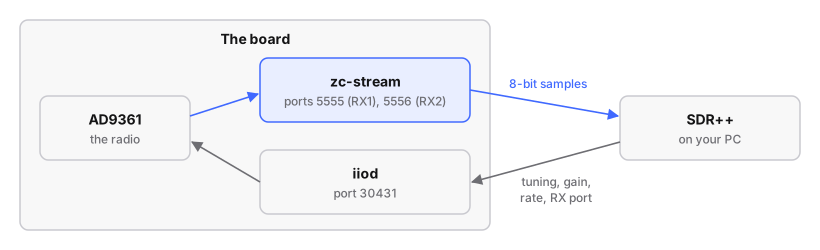
Fast TCP transport carries 20 MS/s, using 8-bit samples from
zc-stream on the board. It needs the patched SDR++
and the Debian root (firmware-modern/), which has systemd and a compiler.
-
Once: build and install
zc-streamon the board as a service. It then starts at every boot and waits, idle, for SDR++.# run from: the repo root, on your PC scp -r tools/stream-paths/zc-stream root@192.168.2.1:# run from: the board, in ~/zc-stream apt install gcc make libiio-dev make && make install systemctl enable --now zc-stream -
In SDR++, stop, set Transport to Fast TCP, 8-bit (zc-stream), pick a rate up to 20 MHz, and play. Leave zc-stream port at 5555: RX1 comes from port 5555 and RX2 from 5556.
| What it costs | |
|---|---|
| dynamic range | about 48 dB between the strongest and weakest signal you can see at once, instead of 72 dB. Set the gain so the strongest signal is near the top |
| the network only | it needs the board's address (an ip: device); over USB, use libiio |
| one program receives at a time | another program that tries to stream is refused with "Device or resource busy" |
| up to 20 MS/s | pick 19 MS/s when every sample counts |
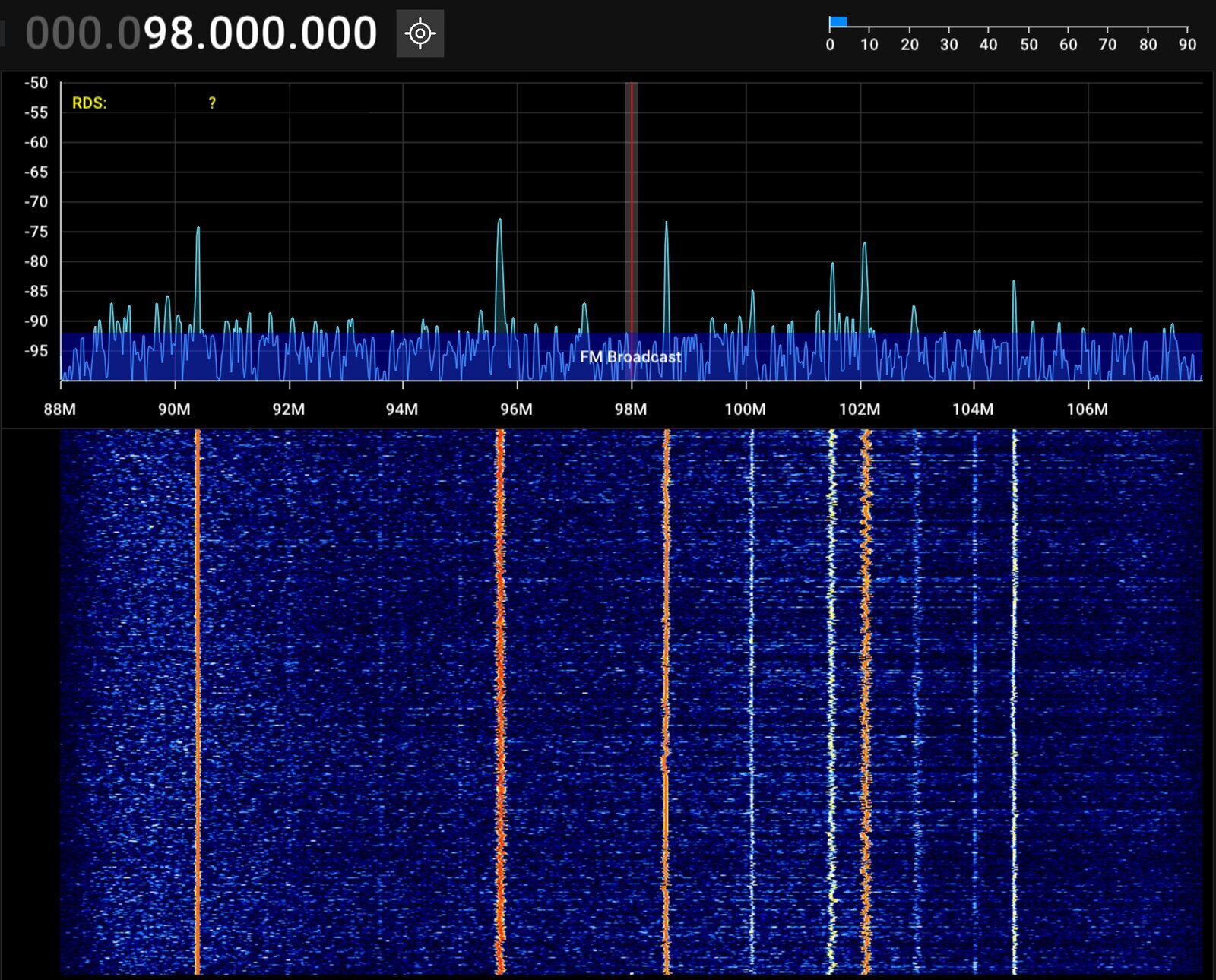
You should see: a live view up to 20 MHz wide, as here across the FM band:
The costs in full, and the measurements: SDR++ · faster streaming.